The first big shift in how we use software in years is underway.
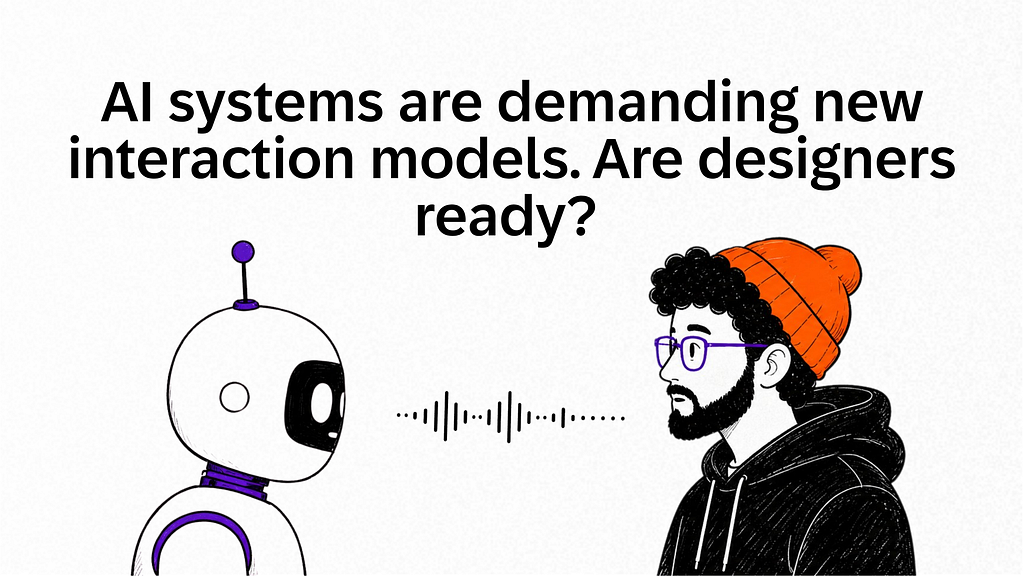
For decades, most software interactions have worked the same way. You open applications, close them, drag files into folders, click through menus, move between windows…
That’s the desktop metaphor, software designed to feel like a physical workspace. Mobile touch and the web brought their own interaction models, but the desktop set much of the grammar, and it still defines how people move through software even as interfaces evolve around it.
Now, AI systems are challenging that grammar.
Conversational interaction in software has been around for quite some time (we’ve all used Alexa, Siri, and chatbots), but only within scripted bounds, responding to user input. Recent models can interpret intent, take action on it, and build parts of the interface as they go.
We’re moving from task-driven interfaces, where you operate every step, to intent-driven interfaces, where the work starts after you’ve spoken or typed your intent.
Are there new interaction models on the table now? And if there are, where do designers come in?
Past the back-and-forth
While writing this article, I read that Thinking Machines Lab , an AI startup founded by Mira Murati (the former CTO of OpenAI), released a research preview of Interaction Models.
The company uses the term “interaction models” to name what they’ve been building. See the distinction:
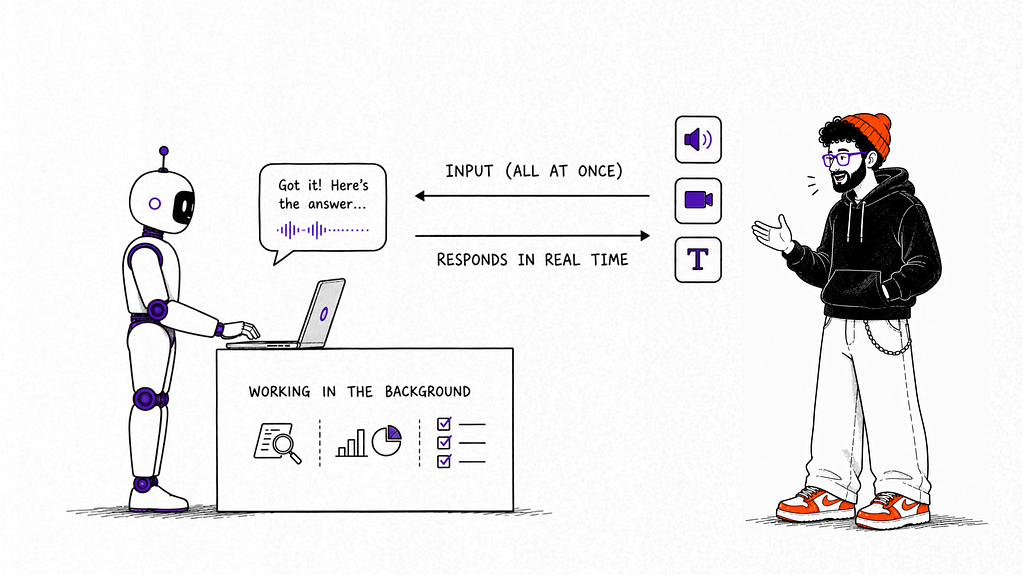
Thinking Machine’s Interaction Models is a new kind of AI model with an architecture designed for real-time multimodal exchange (audio, video, and text simultaneously).
In design, an interaction model is the overarching framework that ties a product’s functions together.
What a coincidence… or is it?
Not quite. Both use the same word for two different layers of the same stack. The model layer concerns what the system can do internally: how it processes input, maintains context, and responds across modes. The design layer is about how a person experiences that work: what they see, what they click, and what mental model they form.
Design is the translation between what the model can do and how a person uses it. When the model gains new capabilities, such as holding a real-time conversation across audio, video, and text, the design layer above it has to translate them into something people can work with.
In the demo videos Thinking Machine Labs shared , Interaction Models takes in audio, video, and text at once and respond while you’re still talking. It can cut in when you say something wrong, react to what it sees on camera, and translate one language into another on the fly.
In one clip, two people ask it to build a chart of Uber’s earnings and costs. The chart is a generative UI, built on the spot for that one question. While the model is still drawing it in the background, they ask what Uber has been up to for the business this year. The model keeps the conversation going and brings the chart in when it’s ready.
Underneath all the engineering, what’s changing is the rhythm of the interaction. The old setup made you wait for the machine, and made the machine wait for you. This one takes the waiting out, so the exchange runs without stopping.
That change in rhythm is what puts pressure on the interaction model. The framework we have been using assumes turn-taking. An AI model that listens, talks, and works in parallel doesn’t fit into that structure.
What designers have to consider
Once interaction becomes continuous (rather than sequential), the role of design changes in a few specific ways:
- The mental model has to be rebuilt. The desktop metaphor gave users a picture they could navigate (files, folders, apps). With AI in the loop, that picture is incomplete. Users have to form a mental model of something invisible: a system that interprets intent, acts on it, and produces output. Designers have to make that thinking visible.
- Entry and navigation change shape. A user might start in a chat, end up in a generated UI, then move into a permanent dashboard. They might launch an agent from any context. The interaction model needs new conventions for where things begin, how to return, and how to find what was done before.
- Intervention points become a deliberate design choice. Old interfaces gave the user control at every click. New ones run faster than that. Designers have to choose where to insert review, undo, and confirmation, and what those look like.
- Routing judgment back to humans matters more than it used to. AI models have specific gaps. A recent paper from TCS Research , “Can LLMs Perceive Time?”, found that the strongest models estimate task duration four to seven times too high and can’t tell you how long their own work took, even right after finishing it. They know about time but don’t have a felt sense of it. The same gap shows up wherever AI has to make a contextual call. A model can lay out a settings panel in seconds, but whether that panel belongs in front of an admin managing ten thousand seats, at this step in the flow, under this much regulatory weight, is a judgment the model can’t make. The interaction model has to route those calls to a person who can be held responsible.
Some argue that traditional interfaces are on the way out, replaced by AI agents that talk to users on behalf of the underlying systems.
For many use cases, they may be right. Traditional screens may well fade where AI agents can handle the work end-to-end. Agents don’t care about the UI. But humans do.
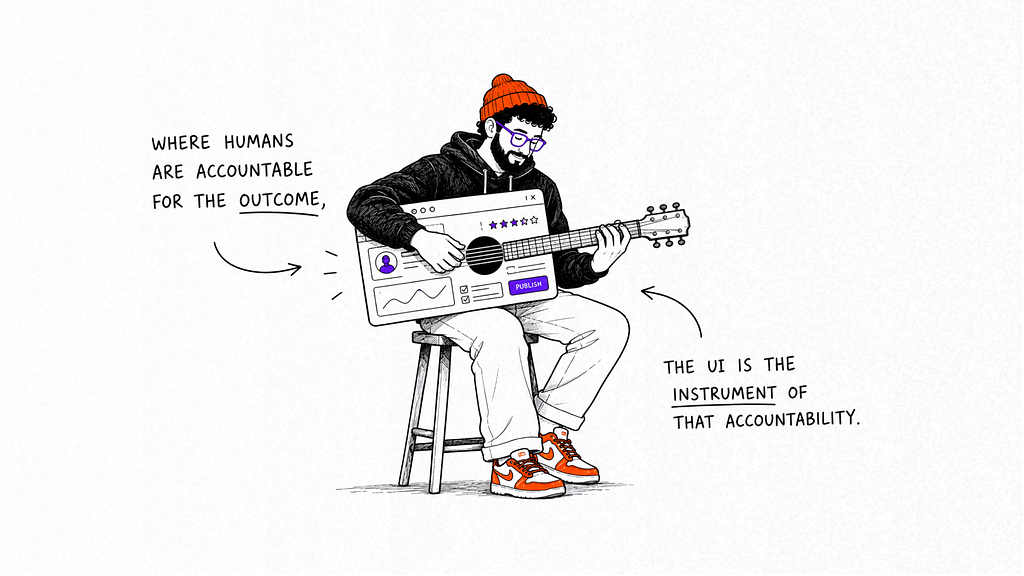
Where humans are accountable for the outcome, the UI is the instrument of that accountability. It’s how a person sees what the system did, understands the result, and steps in when something needs correcting.
This is especially relevant in enterprise software, where decisions often need to be reviewed or audited. Any new interaction model has to make the system’s actions visible as they happen. It needs to give people a place to step in and a record they can go back to.
Building a new relationship is the ultimate challenge
Designer and creative director Frank Chimero once wrote that people ignore design that ignores people. That’s the test any interaction model has to pass. The desktop metaphor passed it for forty years by giving people a clear mental model: files in folders, apps on a screen, hierarchies they could navigate.
The new interaction models we’re starting to build, conversational, agentic, multimodal, generative, don’t have that kind of clarity yet. We are stepping into a different kind of relationship between people and systems. One we’re still learning how to describe.
Arin Bhowmick (@arinbhowmick) is Chief Design Officer at SAP, based in San Francisco, California. The above article is personal and does not necessarily represent SAP’s positions, strategies or opinions.
AI systems are demanding new interaction models. Are designers ready? was originally published in UX Collective on Medium, where people are continuing the conversation by highlighting and responding to this story.